


Following a chaotic eclipse season, September asks us to ground enormous internal change without extinguishing the fire that created it. The revelations of August may still be settling into place, and while the dust begins to clear, we may find ourselves standing in the unfamiliar landscape left behind.
The question now is not simply “What has changed?” but rather, “What are we going to do with what we now know?”
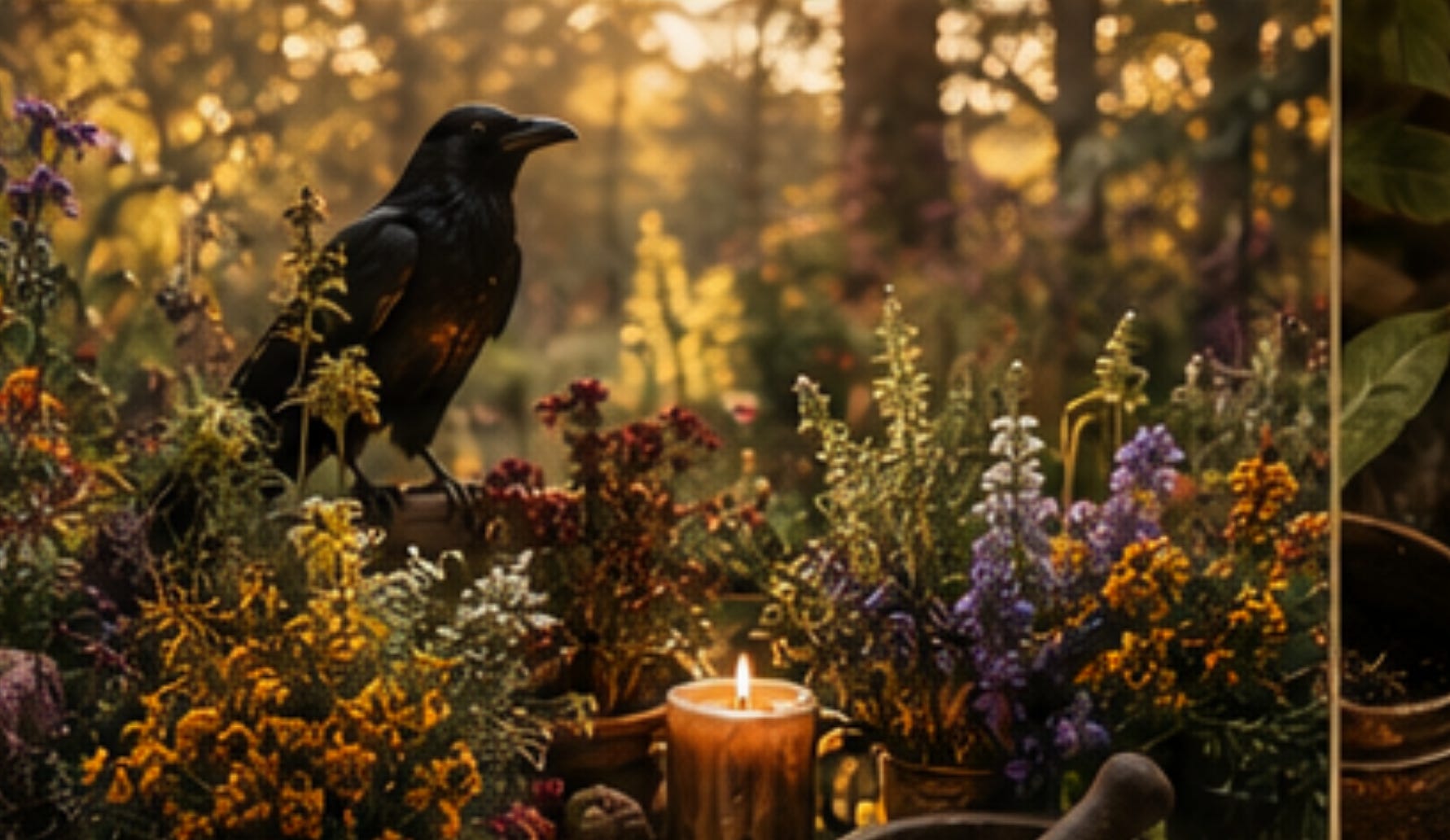
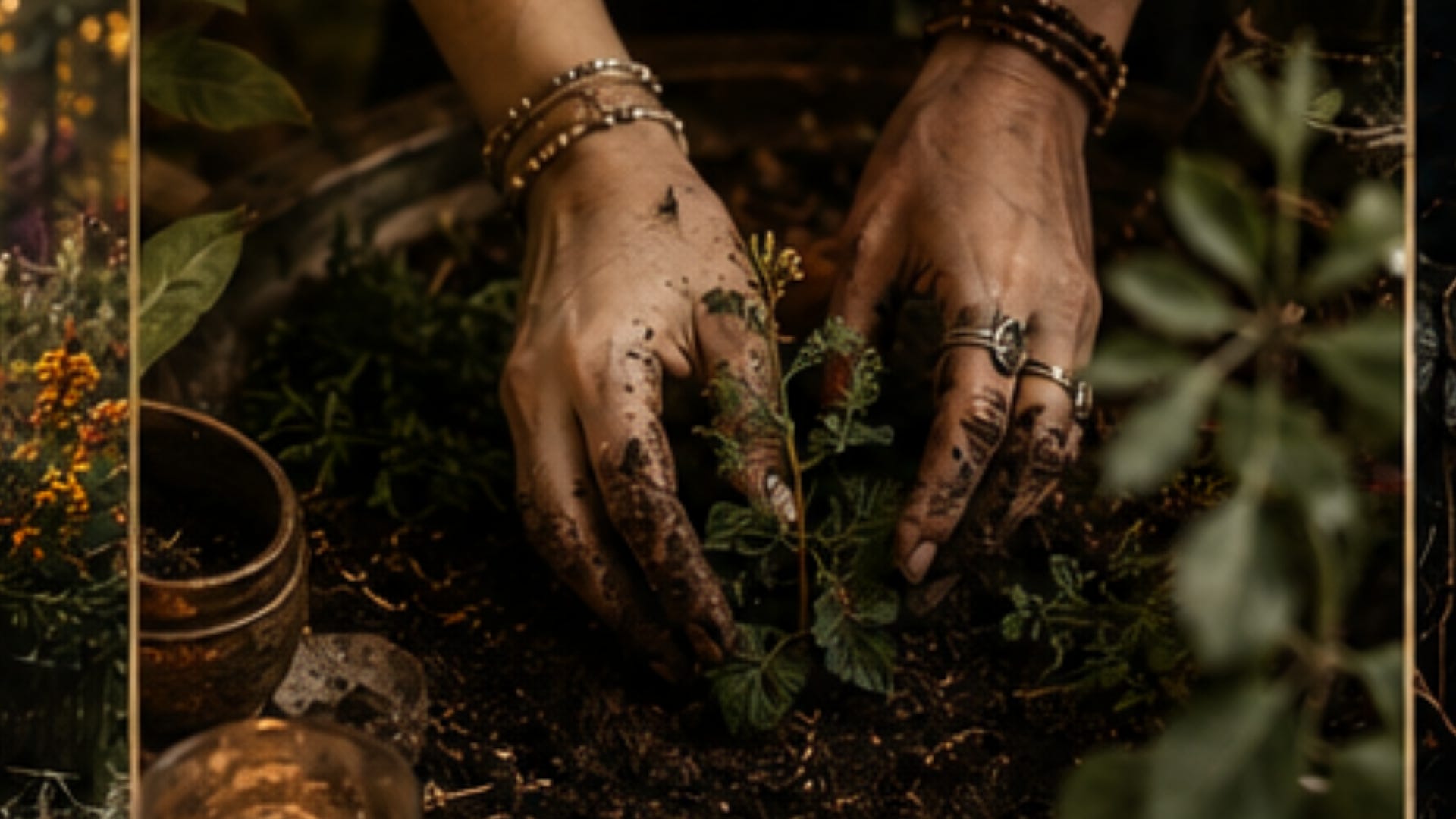
This month, we may find that our lives, like our gardens, require watering, pruning, planting, composting, and harvesting. We may also discover that some beliefs we seeded long ago have outlived their usefulness and need to be pulled up by the roots, cleared from the soil, and discarded to make room for new growth.
September is not about rushing to replace everything that has fallen away in the wake of the chaos. It is about getting our hands into the soil and paying attention to what remains. What is dead, isn’t necessarily useless. Some things must decompose before they can be used as nourishment for something new.
SEPTEMBER AT A GLANCE
Sept. 1 — Mars square Saturn
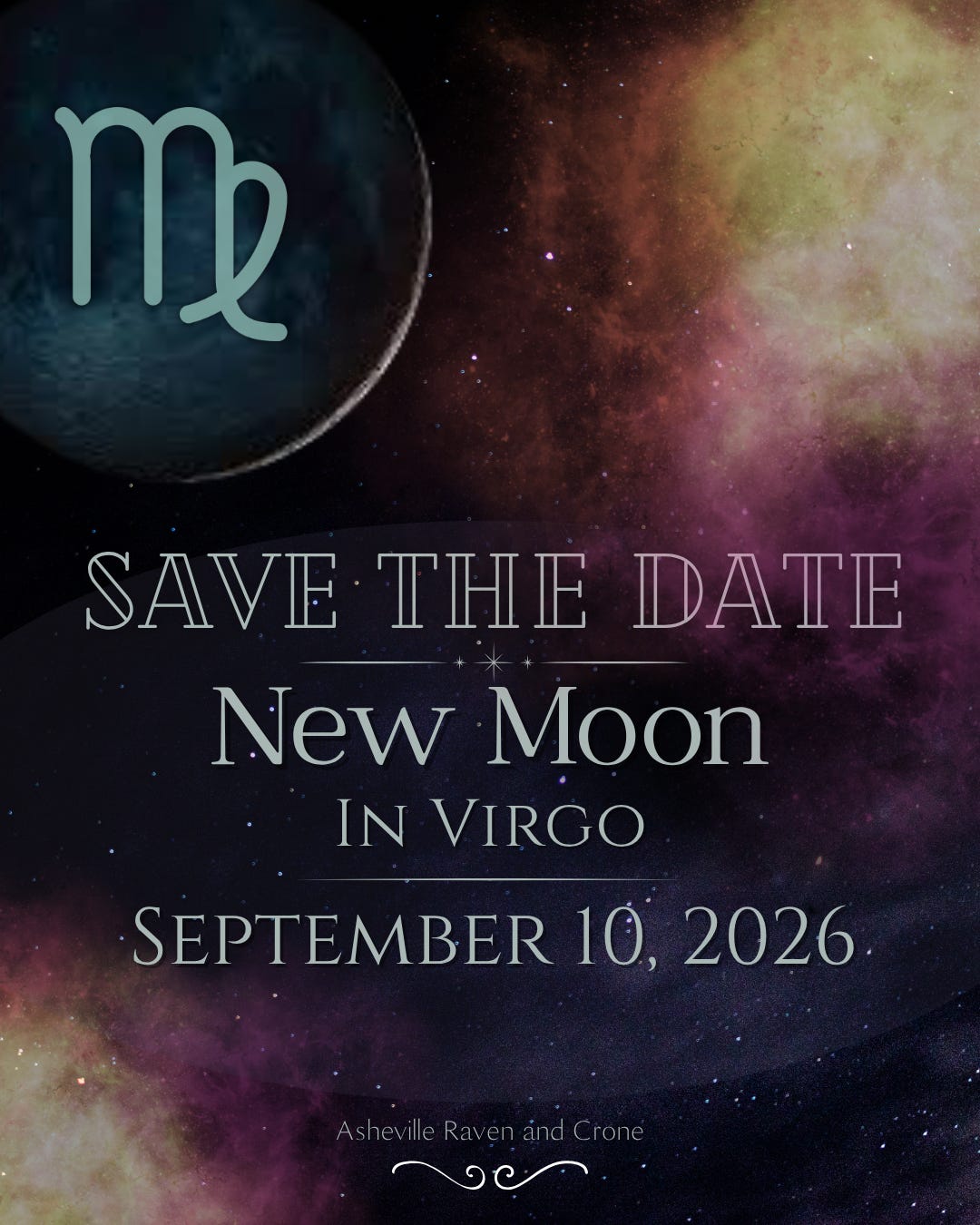
Sept. 10 — Virgo New Moon + Venus enters Scorpio + Uranus stations retrograde + Mercury enters Libra
Sept. 13 — Mercury trine Uranus
Sept. 14 — Sun sextile Mars
Sept. 15 — Venus square Pluto
Sept. 17 — Chiron retrogrades into Aries
Sept. 18 — Mercury opposite Saturn
Sept. 22 — Autumn Equinox / Mabon/ Libra Season Begins
Sept. 26 — Full Moon in Aries / Harvest Moon
Sept. 27 — Mars enters Leo
Sept. 30 — Mercury enters Scorpio
We don’t have to understand the entire path forward yet. We simply need to tend to the next piece of ground in front of us.
Week 1: September 1-5
Mars squares Saturn on September 1st, starting the month with a sense of friction. Mars wants to see movement; Saturn wants us to slow down, assess, and respect the limitations of reality. This can leave us feeling frustrated, blocked, or as though our efforts are producing far less than they should. We may be tempted to push harder, prove ourselves, or measure our worth by how much we can accomplish.
Instead, this transit invites us to reconsider what productive action actually looks like.
This is good astrological timing. Reconsidering productivity and worth is an aligned task for Virgo’s season. Virgo is often mistakenly seen as the perfectionist of the zodiac, but Virgo’s character is far less interested in perfection than we often assume.
Virgo cares about Integrity.
A better alignment for Virgo’s character can be found in the art of arrangement, craftsmanship, and the ability to pivot.
Sometimes the most magickal thing we can do is stop forcing the door.
Thoughtful planning, patience, and an honest assessment of our resources can ease some of the pressure during this time. Saturn reminds Mars that not every obstacle is a punishment or a sign that we are failing. Some obstacles are simply asking us to change our approach.
This is particularly important in the aftermath of eclipse season. We may be eager to act on every revelation at once- to rebuild, reinvent, and immediately become the person we glimpsed on the other side of the chaos. But transformation does not happen simply because we have recognized what needs to change. It happens when we begin making different choices, consistently and deliberately.
Witch Tip: Virgo honors the sacred act of paying attention. Sorting the herbs. Cleaning the altar. Learning the correspondences. Making the offering. Doing the small things that allow mundane magick to become tangible. Let your productivity be slow and sustainable.
Week 2: September 6-12
Midweek is heavy. Around September 10–11, three significant movements converge: Uranus stations retrograde in Gemini, Venus enters Scorpio, and the New Moon arrives in Virgo. Each speaks to a different layer of our lives, but together they create a powerful invitation to question, reveal, and refine.
We may experience a sense of restlessness as Uranus prepares to station retrograde in Gemini. Uranus disrupts the familiar, and in Gemini, its influence reaches into the ways we think, communicate, learn, connect, and exchange information. We may notice disruptions or unexpected developments around technology, transportation, learning, communication, or the systems we rely upon to move information through the world.
But Uranus retrograde turns this disruptive energy inward.
Rather than simply changing the world around us, we may begin questioning the internal structures through which we understand it.
What beliefs were handed to you about the world? What beliefs actually belong to you? Which stories have you inherited so many times that you have stopped questioning whether they are true?
We may discover that some of the ideas we carry about ourselves, our relationships, our spirituality, or our place in the world were never truly ours to begin with. They may have been inherited from family, culture, religion, community, or experiences that shaped us before we were old enough to choose differently.
Uranus in Gemini invites us to examine those mental patterns with fresh eyes.
We do not have to continue treating an old story as an immutable truth simply because we learned it early.
This questioning becomes more intimate as Venus enters Scorpio. Venus governs love, pleasure, relationships, values, and resources; Scorpio wants to know what lies beneath the surface. Tender places may emerge around intimacy, trust, security, desire, power, money, and attachment.
This isn’t necessarily comfortable work, but it can be deeply liberating.
Venus in Scorpio asks: What do I actually desire?
Not what I was taught to desire. Not what keeps everyone else comfortable. Not what looks good from the outside. But rather, what do I want when I am honest with myself?
What are we holding onto because we genuinely value it, and what are we holding onto because we are afraid of what will happen if we let go?
This is potent territory for shadow work. We may become more aware of energetic entanglements, unhealthy attachments, unspoken resentments, old wounds, or places where fear has become confused with love. Rather than judging what surfaces, we can approach it with curiosity and compassion.
The garden is healthiest when we cull the weeds that have become invasive.
We don’t have to transform everything at once. We don’t have to create the perfect routine, the perfect ritual, or the perfect version of ourselves. Virgo reminds us that meaningful change is often made through small acts of attention repeated over time.
This is the magick of Virgo’s refinement: not becoming perfect, but becoming more intentional.
And perhaps this is the deeper lesson of the week. Uranus asks us to question the beliefs that shape our reality. Venus asks us to become honest about what we desire and what we are entangled with. Virgo asks us to take that awareness and make practical changes in the way we live.
Question. Reveal. Refine.
The garden does not need to be perfect.
It needs to be tended.
Witch Tip: This is a a powerful period for cord cutting, ancestral work, protection magick, glamour, desire magick, deepening intimacy, releasing unhealthy energetic attachments, and reclaiming personal power.
Week 3: September 13-19
By the third week of September, the work of tending our inner garden begins to bear information of its own. What we have been questioning, examining, and refining may begin to speak back to us. This week brings flashes of insight, meaningful conversations, heightened intuition, and opportunities to recognize patterns that have been operating beneath the surface.
Around September 12–13, Mercury trine Uranus elevates communication and thought, opening unexpected pathways between ideas. We may experience sudden realizations, unusual connections, or information arriving at precisely the moment we need it. Conversations can take surprising turns, and ideas that once seemed disconnected may suddenly click into place.
This is an excellent time to pay attention to synchronicities.
Write down the strange thought. Follow the unexpected curiosity. Record the dream. Ask the question you’ve been avoiding.
When Uranian energy is active, insight doesn’t always arrive in a neat, logical package. Sometimes the answer comes as a flash, a coincidence, a conversation overheard at exactly the right moment, or a thought that seems to arrive from nowhere.
There is also a strong intuitive and spiritual undercurrent to this period. Dreams may become more vivid, mystical experiences may feel more immediate, and the boundaries between what we consciously understand and what we intuitively know may become more permeable.
The witch’s task is not necessarily to believe every strange thing that crosses our path.
It is to pay attention without surrendering discernment.
On September 15, Venus squares Pluto, bringing some of the month's shadow themes into sharper focus. The revelations of the previous weeks are only useful if we are willing to do something with them. This is supportive energy for taking initiative, expressing ourselves honestly, and putting our newfound awareness into motion.
And around September 15, the emotional and relational landscape may become particularly revealing. Shadows surrounding relationships, resources, power dynamics, security, and hidden desires may rise to the surface. What has been left unsaid may become increasingly difficult to ignore.
This isn’t necessarily a bad thing.
Honesty clears the air.
The goal is not to expose someone’s wrongdoing or win an argument. The goal is to see the truth of a situation clearly enough that we can make conscious choices about what happens next.
If something has been quietly draining us, this is a good week to name it.
If a relationship has developed an unhealthy power dynamic, this is a good week to acknowledge it.
If our relationship with money, security, or desire is tangled in fear, shame, or control, this is a good week to look at that honestly.
The garden cannot be tended if we refuse to acknowledge what is growing there.
On September 17, Chiron retrogrades back into Aries, where it will remain until April 14, 2027. This shifts our attention toward an older and deeply personal question: Who am I when I am no longer defining myself through my wounds?
Chiron in Aries can bring us into contact with the tender places surrounding identity, independence, courage, anger, agency, and the right to exist as ourselves.
Its retrograde motion turns this work inward.
Journal:
Where have old wounds taught us to doubt our right to take up space?
Where have we confused self-protection with isolation?
Where have we stopped ourselves from acting because we are afraid of failing, being rejected, or being seen?
And perhaps most importantly:
What would we do if we no longer needed our wounds to tell us who we are?
By September 18, Mercury opposes Saturn, serious conversations and heavier thoughts may require us to balance compassion with accountability. This is a useful distinction for any kind of healing work: compassion does not mean avoiding responsibility, and accountability does not require cruelty.
We can acknowledge why someone behaves the way they do without excusing the behavior. We can understand our own wounds without allowing them to run our lives. We can forgive ourselves without pretending nothing needs to change.
Witch Tip: Pay attention to what surprises you. Tell the truth about what you find. And when the revelation arrives, have the courage to let it change you.
Week 4: September 20-26
This week, the work we’ve been doing throughout the month begins to come into focus. We have spent the first weeks of the month grounding ourselves after eclipse season, questioning inherited beliefs, examining our attachments, confronting our shadows, and tending to the places in our lives that need attention. Now, as the Sun enters Libra and we arrive at the Autumn Equinox, we are asked a different question:
What are we willing to embody?
Around September 21st, warmth and kindness begin to return to our conversations, offering an opportunity to soften some of the intensity we’ve experienced earlier in the month. This doesn’t mean abandoning the truths we’ve uncovered or avoiding difficult conversations. Instead, we are reminded that honesty and compassion can coexist. We can speak clearly without speaking cruelly. We can hold boundaries without closing our hearts.
On September 22nd, the Sun enters Libra, bringing us to the Autumn Equinox and the celebration of Mabon. The Wheel of the Year reaches a moment of perfect balance: day and night stand opposite one another, before the darkness begins to claim more of our days.
A Note on Mabon: The Autumn Equinox is an ancient astronomical turning point, while “Mabon” is a modern Pagan name for the sabbat associated with it. Modern Pagan traditions have woven many older harvest customs and seasonal practices into this celebration.
The Equinox is a threshold.
It is a moment to pause between what has been and what is coming.
Virgo asked, What needs tending?
Libra asks, How can we tend it together?
This shift brings our attention toward relationships, reciprocity, harmony, justice, and the ways we participate in one another’s lives. After weeks of intensely personal inner work, we are reminded that transformation does not happen in isolation. We live within relationships- with people, communities, ancestors, the natural world, and the larger web of life.
Yet Libra’s desire for harmony can sometimes tempt us to abandon ourselves in pursuit of peace.
This becomes particularly important as we approach the Full Moon in Aries on September 26th.
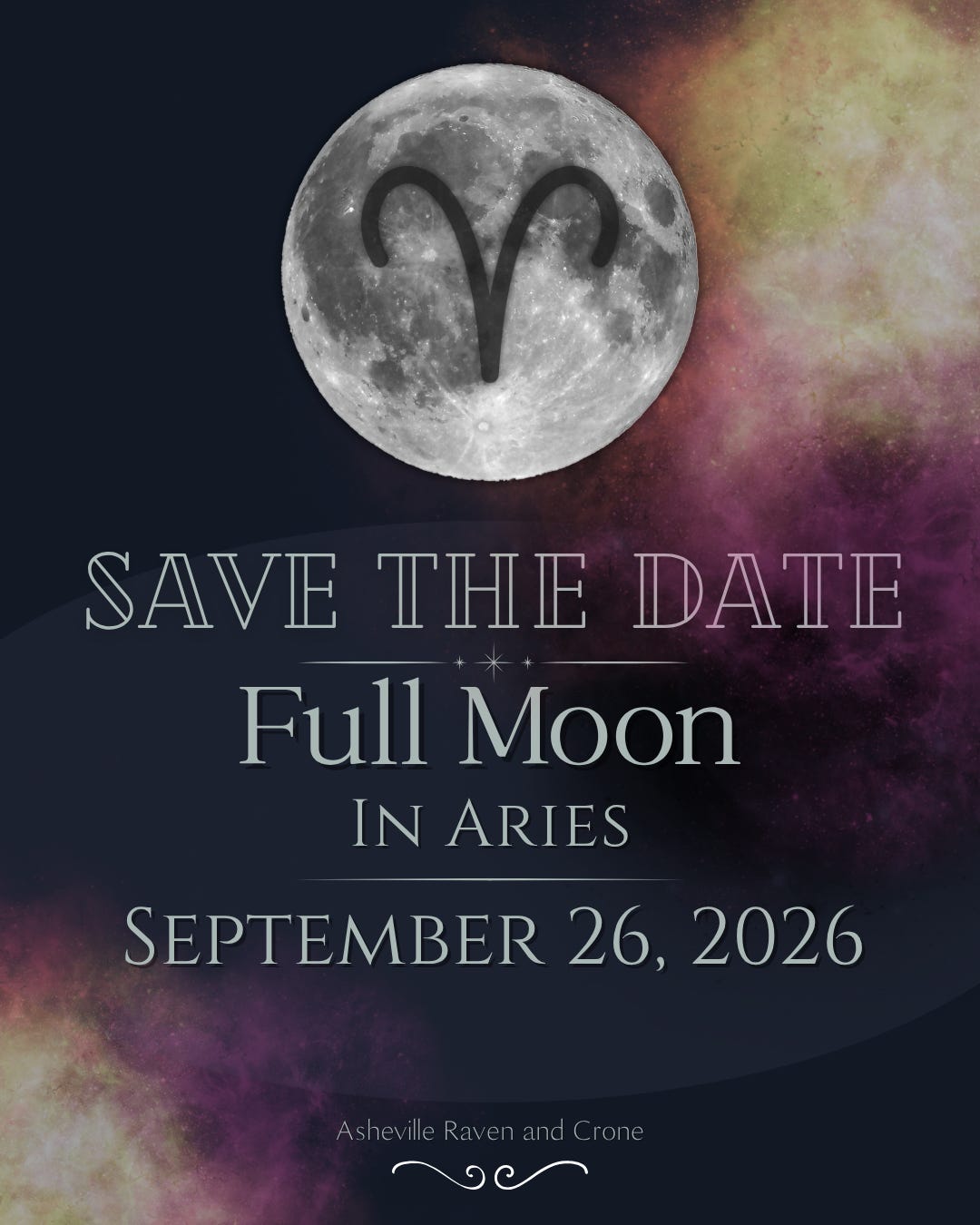
Aries and Libra sit opposite one another on the zodiacal wheel. Aries represents the I; Libra represents the We. One asks us to claim ourselves, while the other asks us to consider how our choices affect those around us.
The Full Moon illuminates the tension between these two truths.
Healthy relationship does not require disappearance. We are allowed to be ourselves and belong to one another. We are allowed to have boundaries and intimacy. We are allowed to need other people without surrendering our agency. We are allowed to choose ourselves without believing that choosing ourselves means choosing against everyone else.
This Equinox and Aries Full Moon period can therefore be a powerful time for reclaiming personal agency. The things we have discovered throughout September are not simply revelations to contemplate; they are invitations to live differently.
Journal:
Where have we sacrificed ourselves to maintain harmony with another?
Where have we prioritized independence to the point of isolation?
Where do we need stronger boundaries?
Where have we mistaken keeping the peace for actually being at peace?
Can we learn to remain whole within our relationships rather than believing that partnership requires the dissolution of one party?
On September 26th, as the Aries Full Moon reaches its fullness, consider what has ripened in the garden of your life.
What have you grown? What have you harvested? What are you proud of? What no longer belongs in the soil? And what are you finally ready to claim as your own?
Week Five:
As September comes to a close, Mars enters Leo, returning us to the fiery territory of courage, creativity, vitality, and self-expression. The fire that began our journey through eclipse season has not been extinguished. It has been tempered.
But Leo hits differently now than it did during August’s eclipse season.
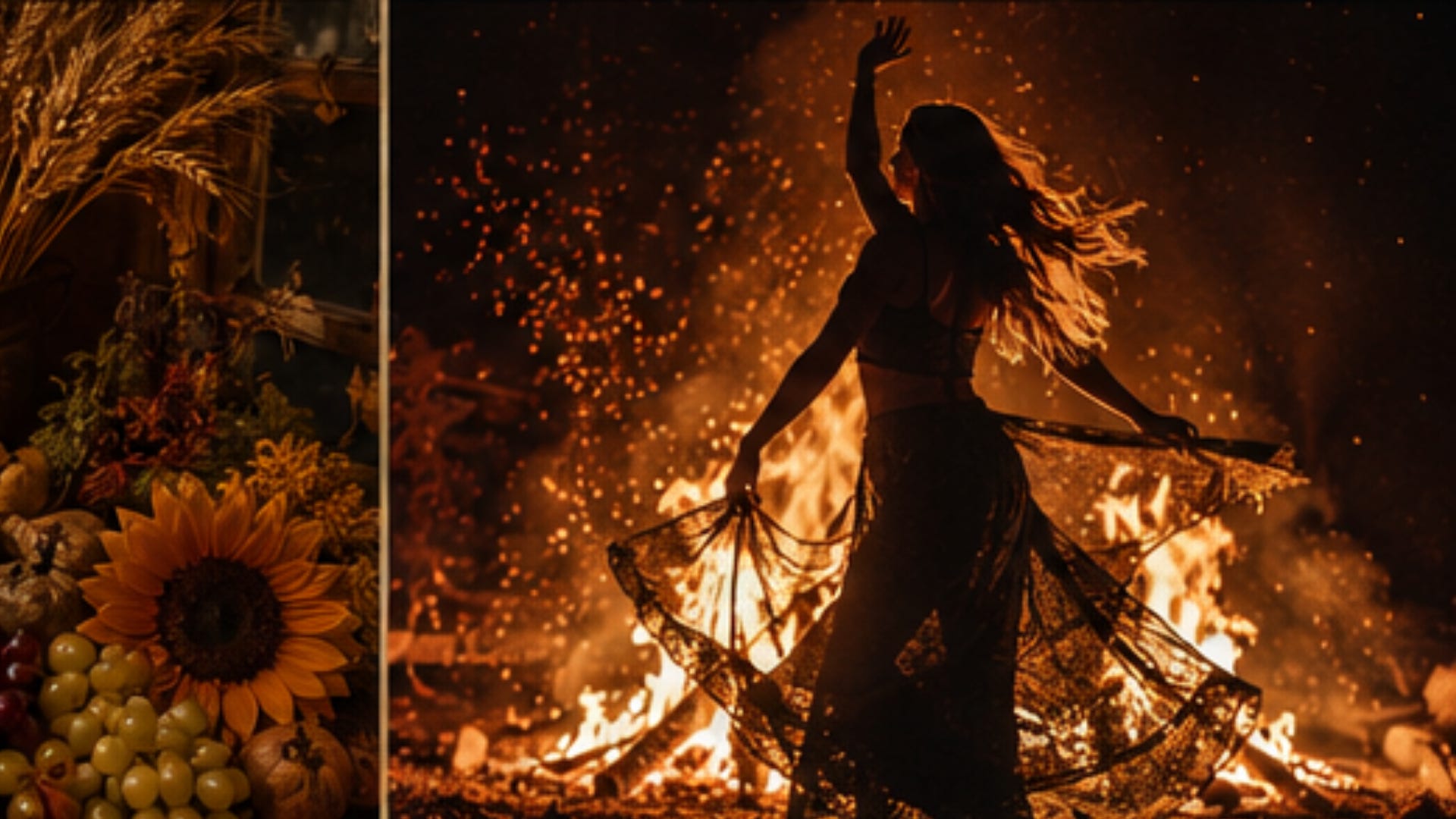
The revelations of eclipse season cannot remain revelations forever. The insights we’ve gathered, the beliefs we’ve questioned, the relationships we’ve examined, the boundaries we’ve established, and the parts of ourselves we’ve reclaimed all require somewhere to live.
Mars in Leo gives us permission to make room for them.
Create something. Play. Take up space. Make the thing you’ve been imagining. Wear the ridiculous outfit. Dance in your kitchen. Tell someone you love them. Put your art into the world. Do something simply because it makes you feel alive.
There is a temptation to think that serious inner work must always lead to another serious task. But joy is also evidence of healing. Pleasure is not frivolous. Creativity is not a distraction from the work.
Joy is part of the harvest.
